How to Cite
Sefair López, A., Dávila Cadena, A. C., & Rodelo Londoño, J. A. (2024). SOSTENIBILIDAD HÍDRICA MEDIANTE MOLINOS EÓLICOS EN COMUNIDADES WAYUU. Renovat: Journal of Interdisciplinary Studies in Social Sciences, Technology and Innovation, 13(2), 47–56. Retrieved from https://revistas.sena.edu.co/index.php/rnt/article/view/7370
Abstract
The water crisis facing the department of La Guajira, in northern Colombia, constitutes one of the greatest challenges in terms of environmental justice, social equity, and territorial sustainability. The Wayuu indigenous communities live in a structurally vulnerable situation stemming from water scarcity, environmental degradation, and limited institutional presence.
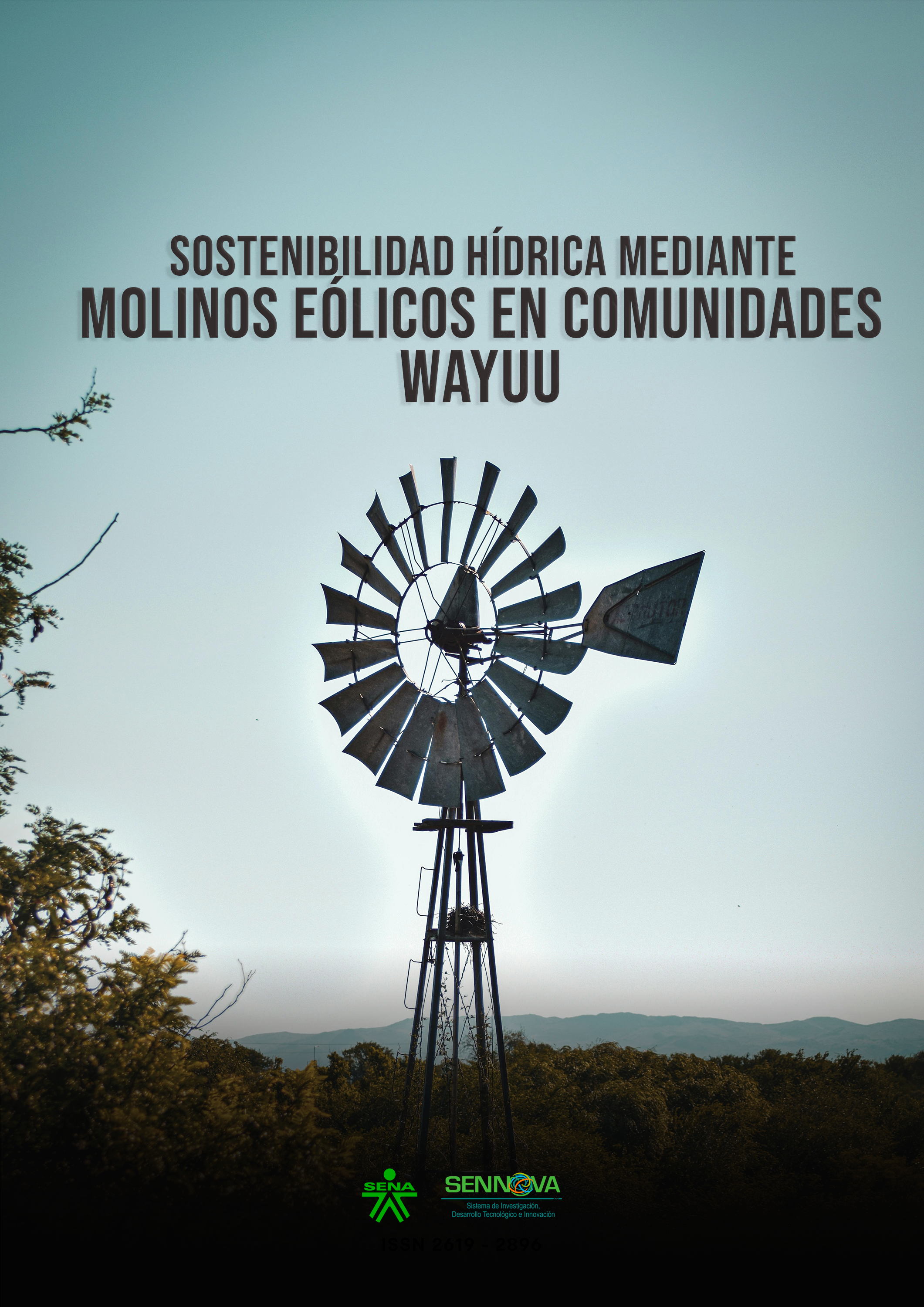
In recent years, community and inter-institutional initiatives have emerged aimed at guaranteeing access to water through the use of appropriate and sustainable technologies. One of the most relevant experiences has been the implementation of windmills or aeropumps, designed to extract groundwater using wind energy, an abundant resource in this region of the department of La Guajira.
This study analyzes the experience of water sustainability through the use of windmills in Wayuu indigenous communities, exploring their technical, social, environmental, and cultural impacts. Through an exploratory-descriptive qualitative methodology, integrating ethnographic fieldwork and supported by semi-structured interviews in Wayuunaiki and document review, the processes of community ownership of water maintenance and the strengthening of local autonomy in the communities are examined. The results show that the recovery and participatory management of the mills has not only improved water security but has also strengthened social cohesion, knowledge transmission, and cultural resilience. This also benefits families living far from the town center.

This work is licensed under a Creative Commons Attribution-NonCommercial-ShareAlike 4.0 International License.
Copyright (c) 2024 SERVICIO NACINAL DE APRENDIZAJE
Downloads
Download data is not yet available.