How to Cite
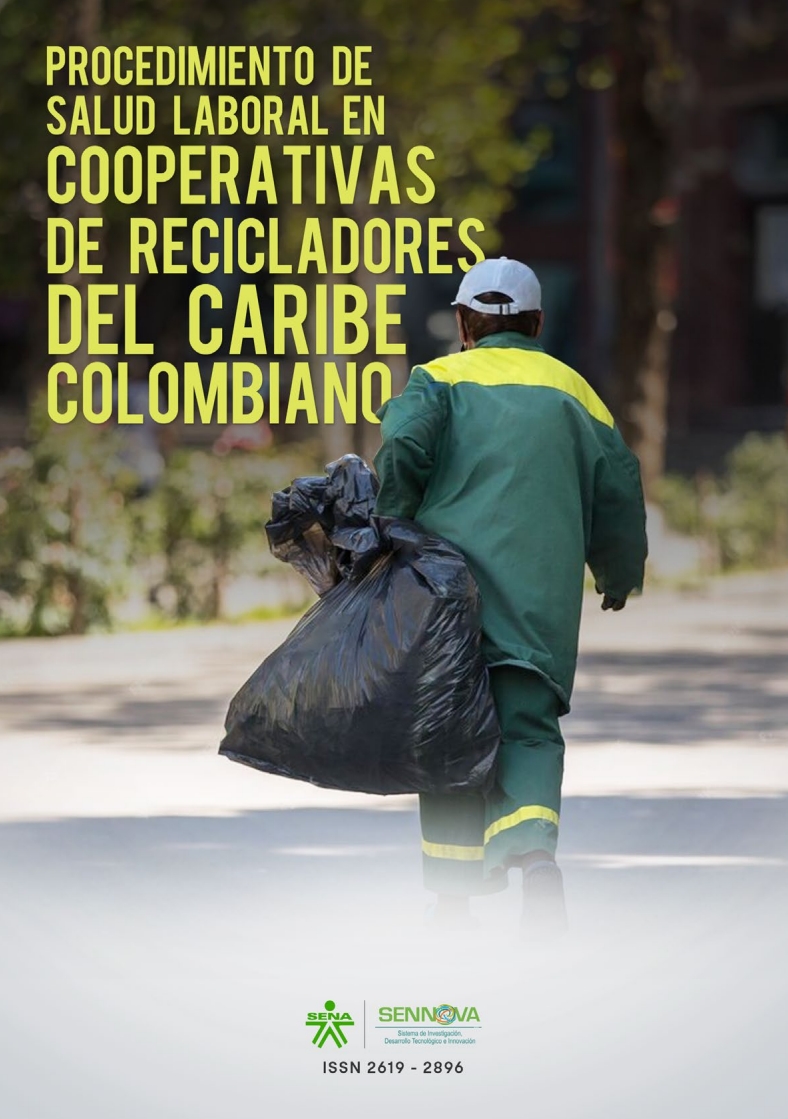
Lugo Calderón, E., & Puello Martínez, A. (2023). OCCUPATIONAL HEALTH PROCEDURE IN WASTE PICKERS COOPERATIVES IN THE COLOMBIAN CARIBBEAN. Renovat: Journal of Interdisciplinary Studies in Social Sciences, Technology and Innovation, 10(1), 65–73. Retrieved from https://revistas.sena.edu.co/index.php/rnt/article/view/6640
Abstract
The objective of the study was to describe the occupational health procedures in recycling cooperatives. A descriptive and field research methodology was used for this purpose, under a non-experimental, cross-sectional design. The population consisted of recycling cooperatives, and the selected sample was one hundred (100) unionized recyclers from the Colombian Caribbean. Observation was employed as a research technique, and a questionnaire was used as the data collection instrument. The questionnaire was composed of items based on a Likert-type attitude scale with five response alternatives. The results showed a high level of compliance with the indicators of Diagnosis, Integration, and Management, suggesting a favorable trend in the management of occupational health within recycling cooperatives in these areas. However, medium compliance was observed for the Security Plan indicator, and a significant weakness in the Infrastructure Design indicator, where the low dispersion of the obtained data suggests consistency in the responses, revealing a noticeable absence of such guidelines. This is mainly because most cooperatives do not engage in planning, and the reasons for this are generally not well understood.

This work is licensed under a Creative Commons Attribution-NonCommercial-ShareAlike 4.0 International License.
Copyright (c) 2023 Servicio Nacional de Prendizaje - SENA
Downloads
Download data is not yet available.