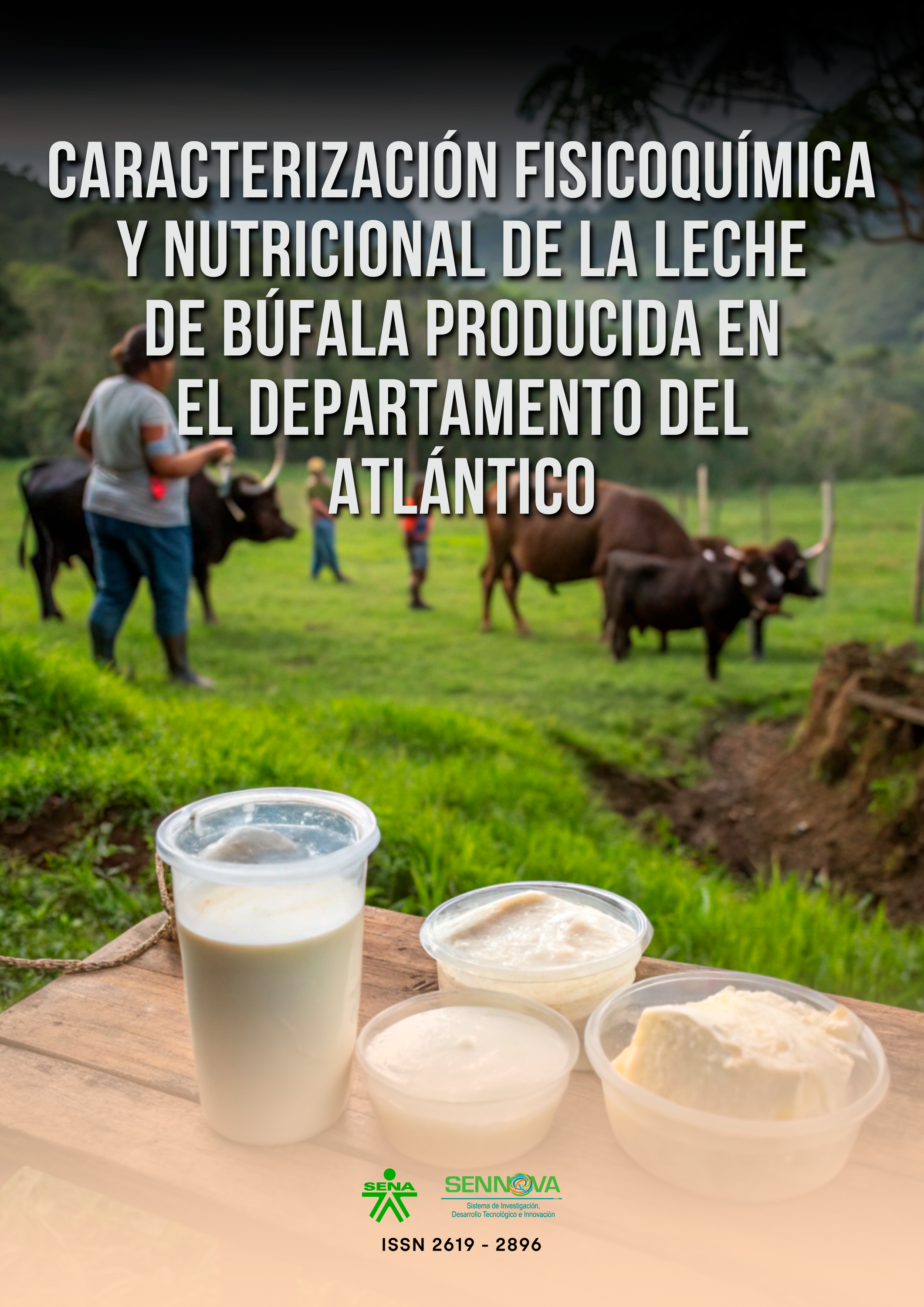
How to Cite
Claro Vásquez, M. J., Pérez de la Ossa, T. I., & Altamar Pérez, T. (2025). PHYSICOCHEMICAL AND NUTRITIONAL CHARACTERIZATION OF BUFFALO MILK FROM PRODUCERS IN THE ATLANTICO DE PARTMENT . Renovat: Journal of Interdisciplinary Studies in Social Sciences, Technology and Innovation, 13(2), 18–32. Retrieved from https://revistas.sena.edu.co/index.php/rnt/article/view/6977
Abstract
This study evaluated the physicochemical and nutritional parameters of buffalo milk from different producers in the department of Atlántico. The samples were transported under isothermal conditions to a specialized laboratory, where parameters such as Fat, Cryoscopic Point, Lactose, Protein, Total Solids, Acidity, Density, Refractive Index and Protein Stability were analyzed. Significant differences were found between the producers in terms of these parameters, with the Manatí producer (central zone) having the highest total solids content (20.193± 0.0152%). Most producers met the requirements established by NTC 399 of 2018 for the percentage of fat, protein, non-fat solids and refractive index. The conclusions of the study indicate that only 16% of producers had negative results for the protein stability of buffalo milk, which highlights the importance of reinforcing hygienic-sanitary practices throughout the entire production chain, from milking to storage, to guarantee the microbiological safety of the milk and preserve its nutritional properties. Statistical analysis revealed that apart from management and environmental factors, animal diet, livestock breeds and milking practices also influence the physicochemical composition of buffalo milk.

This work is licensed under a Creative Commons Attribution-NonCommercial-ShareAlike 4.0 International License.
Copyright (c) 2024 SERVICIO NACINAL DE APRENDIZAJE
Downloads
Download data is not yet available.