How to Cite
López Gómez, A., Cerpa Olivera, F. Y., & Melo Camargo, A. M. (2026). Application of Artificial Intelligence for the Optimization of Maintenance Strategies in Rural Wind Power Systems Technological Integration in the Vientos de Esperanza Project of the SENA – La Guajira Regional Office. Renovat: Journal of Interdisciplinary Studies in Social Sciences, Technology and Innovation, 15(2), 7–14. Retrieved from https://revistas.sena.edu.co/index.php/rnt/article/view/7276
Abstract
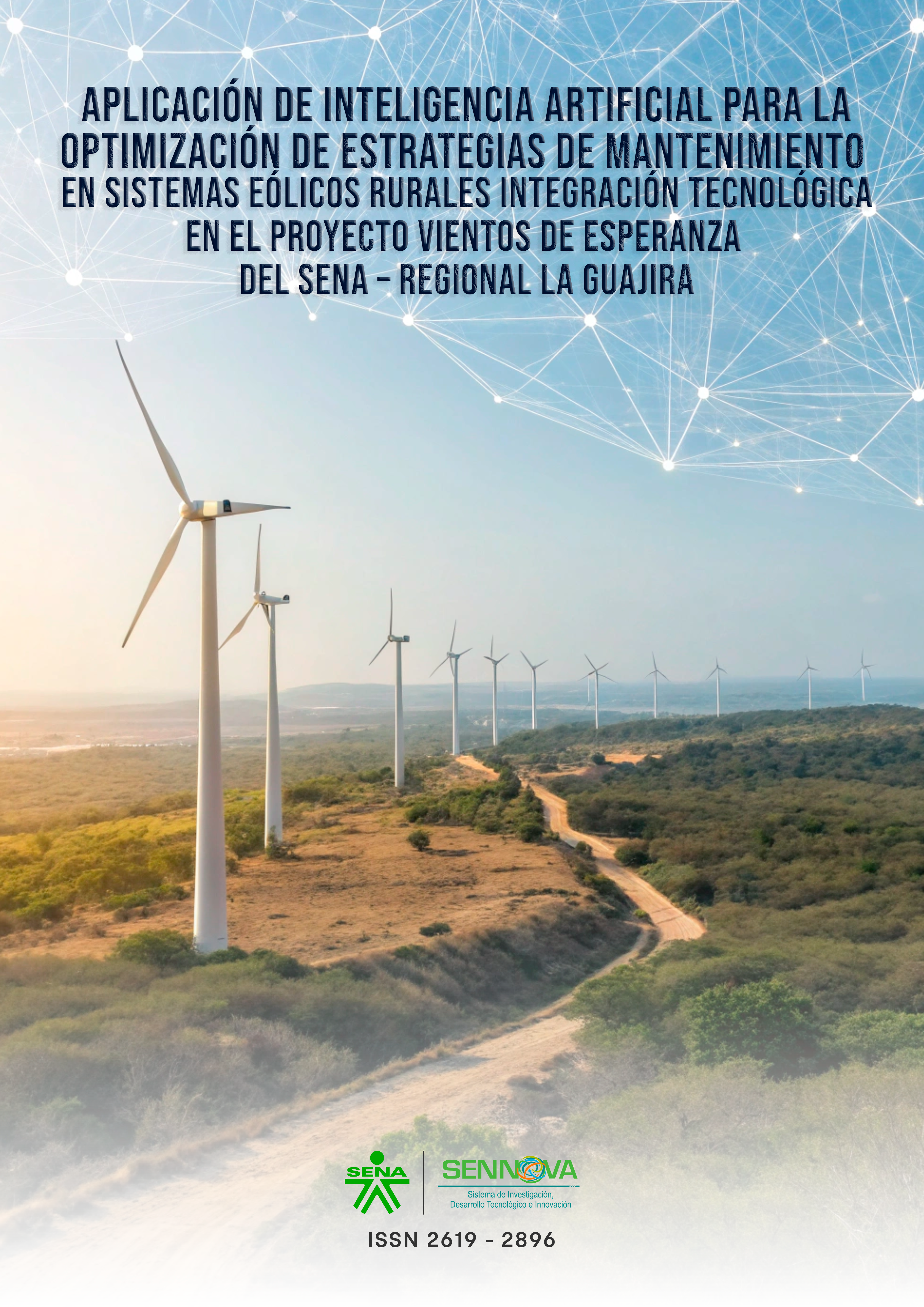
Sustainable access to water in rural areas of La Guajira depends largely on the continuous operation of wind systems designed to extract groundwater. However, the lack of structured maintenance strategies has limited the reliability and availability of these systems. This article analyzes the application of artificial intelligence techniques as a tool to optimize maintenance strategies in rural wind systems, within the framework of the Vientos de Esperanza project of SENA Regional La Guajira. The research adopts a descriptive-analytical approach, supported by a systematic literature review on predictive maintenance, reliability, and artificial intelligence models applied to wind systems. The results show that the integration of AI algorithms strengthens maintenance decision-making, improves early fault detection, and optimizes asset management in rural contexts. It is concluded that the application of artificial intelligence is a viable alternative for increasing the operational sustainability of rural wind power systems and strengthening the social impact of the project.

This work is licensed under a Creative Commons Attribution-NonCommercial-ShareAlike 4.0 International License.
Copyright (c) 2025 SERVICIO NACINAL DE APRENDIZAJE
Downloads
Download data is not yet available.