Keywords
flexion
tensile strenght
compression
IZOD impact
flammability
volumetric density madera plástica
flexión
tracción
compresión
impacto IZOD
inflamabilidad
densidad volumétrica
How to Cite
Abstract
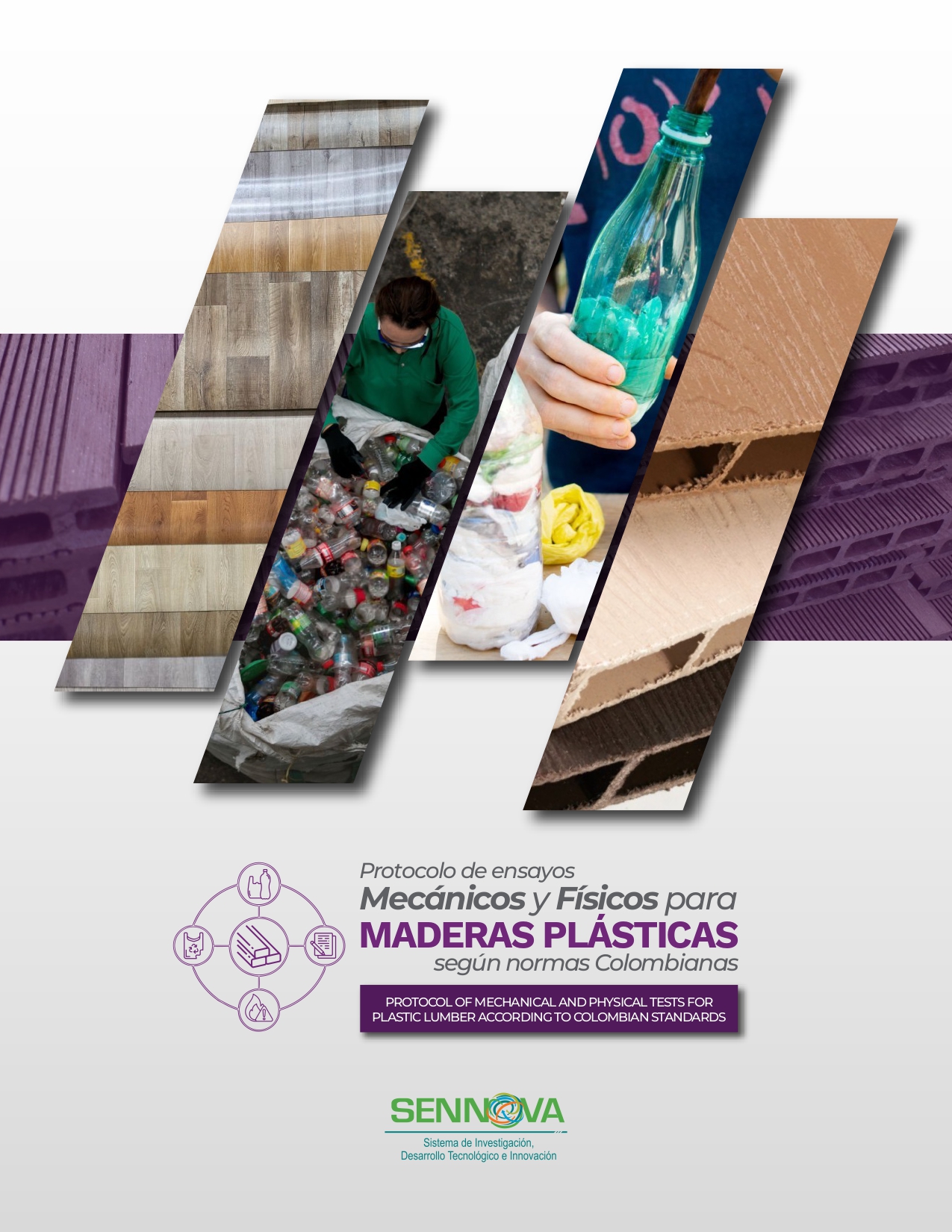
This article presents a protocol for mechanical and physical testing of plastic lumber, developed in accordance with Colombian technical standards NTC: 595, 6296, 6355, 943 and 467. The research arises in response to the environmental problems in Colombia derived from the inadequate management of plastic, where most of the waste ends up in landfills or rivers. The creation of new materials from recycled plastics, such as plastic lumber, offers a sustainable solution.
The objective of the study is to develop a protocol to mechanically and physically characterize plastic lumber for use in civil construction and comply with legal requirements in Colombia. The evidence obtained through laboratory analysis will demonstrate its ability to comply with the earth-quake standard NSR-10, key for its adoption. The protocol includes tensile, compression, Shore D hardness, IZOD impact and flexural tests, following Colombian technical standards, as well as flammability and volumetric density tests.
The study has resulted in a protocol for mechanical and physical testing of plastic lumber, focused on characterizing the material for use in civil construction. This represents an advance in the solution of environmental challenges associated with the inadequate management of plastic waste. Its implementation facilitates the use of plastic lumber in construction and supports the transition to a sustainable future.
References
Greenpeace Colombia. (2024). Día de la Tierra 2024: este debe ser el año que comience el fin de los Plásticos para proteger nuestros océanos. - Greenpeace Colombia. Recuperado de: https://www.greenpeace.org
Ruiz A., J. C., Lozano O., D. A., & González M., J. S. (2019). propiedades físicas y mecánicas de la madera plástica para uso en estructura de atención y prevención de desastres de la "ESMIC". Revista Ingeniare, (27), 31+.Recuperado de: http://dx.doi.org.bdigital.sena.edu.co/10.18041/1909-2458/ingeniare.27.6616
ICONTEC., (2024)., Método de ensayo para determinar las propiedades de tracción en los plásticos (NTC 595). Recuperado de: https://tienda.icontec.org
ICONTEC., (2018)., Método de ensayo para evaluar las propiedades a la compresión de madera plástica y perfiles (NTC 6296). Recuperado de: https://tienda.icontec.org
ICONTEC., (2019)., Métodos de ensayo estándar para determinación de las propiedades de flexión de madera plástica reforzada y no reforzada y productos relacionados (NTC 6355). Recuperado de: https://tienda.icontec.org
ICONTEC., (2003)., Determinación de la resistencia de los plásticos al impacto del péndulo IZOD (NTC 943). Recuperado de: https://tienda.icontec.org
ICONTEC., (2006)., Propiedades del caucho, determinación de dureza con durómetro (NTC 467). Recuperado de: https://tienda.icontec.org
SERVICIO NACIONAL DE APRENDIZAJE (SENA)., (2024, febrero)., Instructivo Ensayo Inflamabilidad Maderas Plásticas CDITICL-LMI-I010; V:01., documento interno laboratorios servicios tecnológicos Dosquebradas, Risaralda.
SERVICIO NACIONAL DE APRENDIZAJE (SENA)., (2023, octubre)., Instructivo Ensayo Densidad Maderas Plásticas CDITICL-LMI-I008; V:01., documento interno laboratorios servicios tecnológicos Dosquebradas, Risaralda.

This work is licensed under a Creative Commons Attribution-NonCommercial-ShareAlike 4.0 International License.
Copyright (c) 2025 Revista Teinnova