Keywords
muscle contraction
cornea
adenosine triphosphate (ATP)
adenosine diphosphate(ADP)
oxygen consumption
porphyrins contracción muscular
córnea
trifosfato de adenosina (TPA)
difosfato de adenosina (DPA)
consumo de oxígeno
porfirina
cornea
adenosine triphosphate (ATP)
adenosine diphosphate(ADP)
oxygen consumption
porphyrins contracción muscular
córnea
trifosfato de adenosina (TPA)
difosfato de adenosina (DPA)
consumo de oxígeno
porfirina
How to Cite
del Castillo, L. F., Ramírez-Calderón, J. G., Caicedo, C., Ávila-Torres, Y., Caicedo-Cano, D. F., & Compañ, V. (2018). Bio-Energy: muscular work and breathing in the cornea. Informador Tecnico, 82(1), 90–107. https://doi.org/10.23850/22565035.884
Abstract
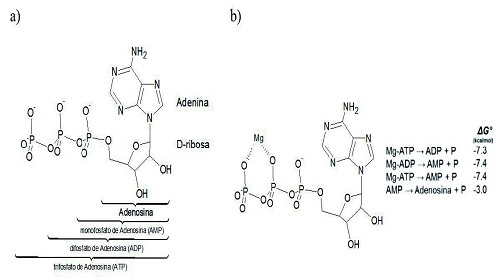
In this review article, two cases of the bioenergy area are presented, in relation to the production of energy via the decomposition of adenosine triphosphate (ATP). The first is the work done by the human body due to the contraction of
the skeletal muscle and the second the process of oxygen diffusion in the cornea. The chemical-physical background of the production and use of the energy molecule par excellence of the ATP is exposed. The generations of bioenergetic molecules
in aerobic respiration and in anaerobic glycolysis are analyzed from the thermodynamic point of view. In this sense, the processes of biosynthesis for the use of the energy stored by the ATP molecules are presented and the active transport of molecules against concentration gradients is described. The vesicular transport of proteins, the permeability of ions through the enveloping membranes to the cell walls by means of the so-called sodium potassium pumps. Subsequently, some details are established about the mechanisms by which muscle contraction occurs, with reference to the structure of muscle fibers. In the second case, the study of the physiology of the cornea is shown, where chemical work is also generated to maintain its transparency to light, coming from outside the eye. This leads to the conservation of the proper structure of the endothelial cells, stroma and epithelium. Likewise, the osmotic work requirement is illustrated to maintain the balance of the pH in the cornea, when it encounters an oxygen deficiency. In such circumstance, an osmotic flow is generated from the aqueous humor towards the stroma which tends to counteract the increase in acidity.
References
Alvord, L. A., Hall, W. J., Keyes, L. D., Morgan, C. F., y Winterton, L. C. (2007). Corneal oxygen distribution with contact lens wear. Cornea, 26(6), 654-664. doi: https://doi. org/10. 1097/ICO. 0b013e31804f5a22
Awschalom, D. D., y Flatté, M. E. (2007). Challenges for semiconductor spintronics. Nature Physics, 3(3), 153-159. doi: https://doi. org/10. 1038/nphys551
Baum, J. P., Maurice, D. M., y McCarey, B. E. (1984). The active and passive transport of water across the corneal endothelium. Experimental Eye Research,39(3), 335-342. doi: https://doi. org/10. 1016/0014- 4835(84)90021-6
Bennett, H. S. (1981). Muscle contraction and enzymatic action: Challenges to quantum chemistry. International Journal of Quantum Chemistry, 20(S8), 317-329. doi: https://doi. org/10. 1002/qua. 560200729
Bonanno, J. A., Clark, C., Pruitt, J., y Alvord, L. (2009). Tear oxygen under hydrogel and silicone hydrogel contact lenses in humans. Optometry and vision science: official publication of the American Academy of Optometry, 86(8), E936.
Bonanno, J. A., Stickel, T., Nguyen, T., Biehl, T., Carter, D., Benjamin, W. J., y Soni, P. S. (2002). Estimation of human corneal oxygen consumption by noninvasive measurement of tear oxygen tension while wearing hydrogel lenses. Investigative ophthalmology & visual science, 43(2), 371-376.
Brennan, N. A. (2005). Beyond flux: total corneal oxygen consumption as an index of corneal oxygenation during contact lens wear. Optometry & Vision Science, 82(6), 467-472. doi: https://doi. org/10. 1097/01. opx. 0000168560.10861.ae.
Brennan, N. A. (2005a). Corneal oxygenation during contact lens wear: comparison of diffusion and EOP-based flux models. Clinical and Experimental Optometry, 88(2), 103-108. doi: https://doi. org/10. 1111/j. 1444- 0938.2005.tb06675.x
Briggs, W. R., y Christie, J. M. (2002). Phototropins 1 and 2: versatile plant blue-light receptors. Trends in plant science, 7(5), 204-210. doi: https://doi. org/10. 1016/S1360-1385(02)02245-8
Cavagna, G. A., Heglund, N. C., y Taylor, C. R. (1977). Mechanical work in terrestrial locomotion: two basic mechanisms for minimizing energy expenditure. American Journal of Physiology-Regulatory, Integrative and Comparative Physiology, 233(5), R243-R261. doi: https://doi. org/10. 1152/ajpregu. 1977. 233. 5. R243
Chen, W., Li, Y., Yu, G., Li, C. Z., Zhang, S. B., Zhou, Z., y Chen, Z. (2010). Hydrogenation: a simple approach to realize semiconductor− half-metal− metal transition in boron nitride nanoribbons. Journal of the American Chemical Society, 132(5), 1699-1705. doi: https://doi. org/10. 1021/ja908475v
Chhabra, M., Prausnitz, J. M., y Radke, C. J. (2009). Modeling corneal metabolism and oxygen transport during contact lens wear. Optometry & Vision Science, 86(5), 454-466. doi: https://doi. org/10. 1097/OPX. 0b013e31819f9e70
Chhabra, M., Prausnitz, J. M., y Radke, C. J. (2009a). Diffusion and Monod kinetics to determine in vivo human corneal oxygen-consumption rate during soft contact-lens wear. Journal of Biomedical Materials Research Part B: Applied Biomaterials, 90(1), 202-209. doi: https://doi. org/10. 1002/jbm. b. 31274
Compañ, V., Aguilella-Arzo, M., Del Castillo, L. F., Hernández, S. I., y Gonzalez-Meijome, J. M. (2017). Analysis of the application of the generalized monod kinetics model to describe the human corneal oxygen-consumption rate during soft contact lens wear. Journal of Biomedical Materials Research Part B: Applied Biomaterials, 105(8), 2269-2281.
Compañ, V., Andrio, A., Lopez-Alemany, A., Riande, E., y Refojo, M. F. (2002). Oxygen permeability of hydrogel contact lenses with organosilicon moieties. Biomaterials, 23(13), 2767-2772. doi: https://doi. org/10. 1016/S0142-9612(02)00012-1
Compañ, V., Oliveira, C., Aguilella-Arzo, M., Mollá, S., Peixoto-de-Matos, S. C., y González-Méijome, J. M. (2014). Oxygen Diffusion and Edema With Modern Scleral Rigid Gas Permeable Contact LensesOxygen Flux Behind Scleral RGP Lenses. Investigative ophthalmology & visual science, 55(10), 6421-6429. doi: https://doi. org/10. 1167/iovs. 14-14038
Del Castillo, L. F., da Silva, A. R. F., Hernández, S. I., Aguilella, M., Andrio, A., Mollá, S., Compañ, V. (2015). Diffusion and Monod kinetics model to determine in vivo human corneal oxygen-consumption rate during soft contact lens wear. Journal of optometry, 8(1), 12-18. doi: https://doi. org/10. 1016/j. optom. 2014. 06. 002
Drain, C. M., Batteas, J. D., Flynn, G. W., Milic, T., Chi, N., Yablon, D. G., y Sommers, H. (2002). Designing supramolecularporphyrin arrays that self-organize into nanoscale optical and magnetic materials. Proceedings of the National Academy of Sciences, 99(suppl 2), 6498-6502. doi: https://doi. org/10. 1073/ pnas. 012521899
Fonn, D., Sweeney, D., Holden, B. A., y Cavanagh, D. (2005). Corneal oxygen deficiency. Eye & contact lens, 31(1), 23-27. doi: https://doi. org/10. 1097/01. ICL. 0000151949. 30730. 9D
Giasson, C., y Bonanno, J. A. (1994). Facilitated transport of lactate by rabbit corneal endothelium. Experimental eye research, 59(1), 73-81. doi: https://doi. org/10.1006/exer.1994.1082
Graham, A. D., Fusaro, R. E., Polse, K. A., Lin, M. C., y Giasson, C. J. (2001). Predicting extended wear complications from overnight corneal swelling. Investigative ophthalmology & visual science, 42(13), 3150- 3157.
Guyer, J. E., Wheeler, D., y Warren, J. A. (2009). FiPy: partial differential equations with python. Computing in Science & Engineering, 11(3). doi: https://doi. org/10. 1109/MCSE. 2009. 52
Harvitt, D. M., y Bonanno, J. A. (1998). pH dependence of corneal oxygen consumption. Investigative ophthalmology & visual science, 39(13), 2778-2781.
Harvitt, D. M., y Bonanno, J. A. (1999). Re-evaluation of the oxygen diffusion model for predicting minimum contact lens Dk/t values needed to avoid corneal anoxia. Optometry & Vision Science, 76(10), 712-719. doi: https://doi. org/10. 1097/00006324-199910000-00023
Hill, R. M., y Fatt, I. (1964). Oxygen measurements under a contact lens. Optometry & Vision Science, 41(6), 382- 387. doi: https://doi. org/10. 1097/00006324-196406000-00004
Holden, B. A., Sweeney, D. F., Vannas, A., Nilsson, K. T., y Efron, N. (1985). Effects of long-term extended contact lens wear on the human cornea. Investigative ophthalmology & visual science, 26(11), 1489-1501.
Huxley, A. F. y Simmons R. M. S. (1971), Propose mechanism of force generation in striated muscule. Nature, 233(5321), 533-538. doi: https://doi. org/10. 1038/233533a0
Kan, E. J., Li, Z., Yang, J., y Hou, J. G. (2008). Half-metallicity in edge-modified zigzag graphenenanoribbons. Journal of the American Chemical Society, 130(13), 4224-4225. doi: https://doi. org/10. 1021/ja710407t
Kushmerick, M., y Davies, R. E. (1969). The chemical energetics of muscle contraction. II. The chemistry, efficiency and power of maximally working sartorius muscles. Proceedings of the Royal Society of London B: Biological Sciences, 174(1036), 315-347. doi: https://doi. org/10. 1098/rspb. 1969. 0096
Larrea, X., y Büchler, P. (2009). A transient diffusion model of the cornea for the assessment of oxygen diffusivity and consumption. Investigative ophthalmology & visual science, 50(3), 1076-1080. doi: https://doi. org/10. 1167/iovs. 08-2479
Leach, R. M., y Treacher, D. F. (1998). ABC of oxygen: Oxygen transport-2. Tissue hypoxia. BMJ: British Medical Journal, 317(7169), 1370. doi: https://doi. org/10. 1136/bmj. 317. 7169. 1370
Lee, K. L. Y., Nguyen, D. P. A., Edrington, T. B., y Weissman, B. A. (2015). Calculated in situ tear oxygen tension under hybrid contact lenses. Eye & contact lens, 41(2), 111-116. doi: https://doi. org/10. 1097/ ICL. 0000000000000075
Leung B. K., Bonanno J. A., y Radke C. J. (2011), Oxygen-deficient metabolism and corneal edema. Progress in Retinal and Eye Research, 30, 471-492. doi: https://doi. org/10. 1016/j. preteyeres. 2011. 07. 001
Lin, M. C., Graham, A. D., Polse, K. A., McNamara, N. A., y Tieu, T. G. (2000). The effects of one-hour wear of high-Dk soft contact lenses on corneal pH and epithelial permeability. The CLAO journal: official publication of the Contact Lens Association of Ophthalmologists, Inc, 26(3), 130-133.
Lodish, H., Berk, A., Zipursky, S. L., Matsudaira, P., Baltimore, D., y Darnell, J. (1995). Molecular cell biology (Vol. 3). New York: Scientific American Books.
Mandell, R. B., y Farrell, R. (1980). Corneal swelling at low atmospheric oxygen pressures. Investigative ophthalmology & visual science, 19(6), 697-702.
Morel, J. E. (2015). Molecular and Physiological Mechanisms of Muscle Contraction. CRC Press. doi: https://doi. org/10. 1201/b19067
Muňiz, J., Marin, J. L., Yeomans, L., Acuňa, H., Del Castillo, L. F., Cruz, S. A., Trujillo, X. y Huerta, M. (1996). Electrostatic forces as a possible mechanism underlying skeletal muscle contraction. Gen PhysiolBiophys, 15, 141-449.
Nicholls, D. G., FergusonS. J. (2013). Bioenergetics 4, Academic-Press, Amsterdam 4 the edition.
Nicholls, J. J., y King-Smith, P. E. (2003). Thickness of the pre-and post–contact lens tear film measured in vivo by interferometry. Investigative ophthalmology & visual science, 44(1), 68-77. doi: https://doi. org/10. 1167/iovs. 02-0377
Papas, E. B. (2003). The role of hypoxia in the limbal vascular response to soft contact lens wear. Eye & contact lens, 29(1), S72-S74. doi: https://doi. org/10. 1097/00140068-200301001-00020
Pérez, J. G., Méijome, J. M. G., Jalbert, I., Sweeney, D. F., y Erickson, P. (2003). Corneal epithelial thinning profile induced by long-term wear of hydrogel lenses. Cornea, 22(4), 304-307. doi: https://doi. org/10. 1097/00003226-200305000-00005
Polse, K. A., y Mandell, R. B. (1970). Critical oxygen tension at the corneal surface. Archives of ophthalmology, 84(4), 505-508. doi: https://doi. org/10. 1001/archopht. 1970. 00990040507021
Purrello, R., Monsu’Scolaro, L., Bellacchio, E., Gurrieri, S., y Romeo, A. (1998). Chiral H-and J-type aggregates of meso-tetrakis (4-sulfonatophenyl) porphine on -helical polyglutamic acid induced by cationic porphyrins. Inorganic chemistry, 37(14), 3647-3648. doi: https://doi. org/10. 1021/ic971432m
Rayment, I., Holden, H. M., Whittaker, M., Yohn, C. B., Lorenz, M., Holmes, K. C., y Milligan, R. A. (1993). Structure of the actin-myosin complex and its implications for muscle contraction. Science, 261(5117), 58-65. doi: https://doi. org/10. 1126/science. 8316858
Roberts, J. E. (1984). The photodynamic effect of chlorpromazine, promazine, and hematoporphyrin on lens protein. Investigative ophthalmology & visual science, 25(6), 746-750.
Rouault, T. A., y Tong, W. H. (2005). Iron–sulphur cluster biogenesis and mitochondrial iron homeostasis. Nature Reviews Molecular Cell Biology, 6(4), 345-351. doi: https://doi. org/10. 1038/nrm1620
Sarver, M. D., Baggett, D. A., Harris, M. G., y Louie, K. (1981). Corneal edema with hydrogel lenses and eye closure: effect of oxygen transmissibility. Optometry & Vision Science, 58(5), 386-392. doi: https://doi. org/10. 1097/00006324-198105000-00007
Smelser, G. K., y Ozanics, V. (1952). Importance of atmospheric oxygen for maintenance of the optical properties of the human cornea. Science, 115, 140. doi: https://doi. org/10. 1126/science. 115. 2980. 140
Smith, A. G., Raven, E. L., y Chernova, T. (2011). The regulatory role of heme in neurons. Metallomics, 3(10), 955- 962. doi: https://doi. org/10. 1039/c1mt00085c
Sweeney, D. F. (1992). Corneal exhaustion syndrome with long-term wear of contact lenses. Optometry & Vision Science, 69(8), 601-608. doi: https://doi. org/10. 1097/00006324-199208000-00002
Sweeney, D. F. (2003). Clinical signs of hypoxia with high-Dk soft lens extended wear: is the cornea convinced?. Eye & contact lens, 29(1), S22-S25. doi: https://doi. org/10. 1097/00140068-200301001-00007
Takahashi, G. H., Fatt, I., y Goldstick, T. K. (1966). Oxygen consumption rate of tissue measured by a micropolarographic method. The Journal of general physiology, 50(2), 317-335. doi: https://doi. org/10. 1085/jgp. 50. 2. 317
Takatori, S. C., de la Jara, P. L., Holden, B., Ehrmann, K., Ho, A., y Radke, C. J. (2012). In Vivo Oxygen Uptake into the Human CorneaIn Vivo Oxygen Uptake into the Human Cornea. Investigative ophthalmology & visual science, 53(10), 6331-6337. doi: https://doi. org/10. 1167/iovs. 12-10059
Wang, J., Fonn, D., y Simpson, T. L. (2003). Topographical thickness of the epithelium and total cornea after hydrogel and PMMA contact lens wear with eye closure. Investigative ophthalmology & visual science, 44(3), 1070-1074. doi: https://doi. org/10. 1167/iovs. 02-0343
Weissman, B. A. (1984). Oxygen consumption of whole human corneas. American Journal of Optometry and Physiological Optics, 61(4), 291-292. doi: https://doi. org/10. 1097/00006324-198404000-00012
Weissman, B. A. (1986). Calculating areal average thickness of rigid gas-permeable contact lenses. Optometry and Vision Science, 63(11), 922-926. doi: https://doi. org/10. 1097/00006324-198611000-00010
Zhang, Z., Wu, X., Guo, W., y Zeng, X. C. (2010). Carrier-tunable magnetic ordering in vanadium− naphthalene sandwich nanowires. Journal of the American Chemical Society, 132(30), 10215-10217. doi: https://doi. org/10. 1021/ja1029057
Downloads
Download data is not yet available.