Keywords
Drone bees
fat
fiber
food
protein
sustainability
worker bees Alimento
fibra
grasa
obreras
proteína
sostenibilidad
zánganos
fat
fiber
food
protein
sustainability
worker bees Alimento
fibra
grasa
obreras
proteína
sostenibilidad
zánganos
How to Cite
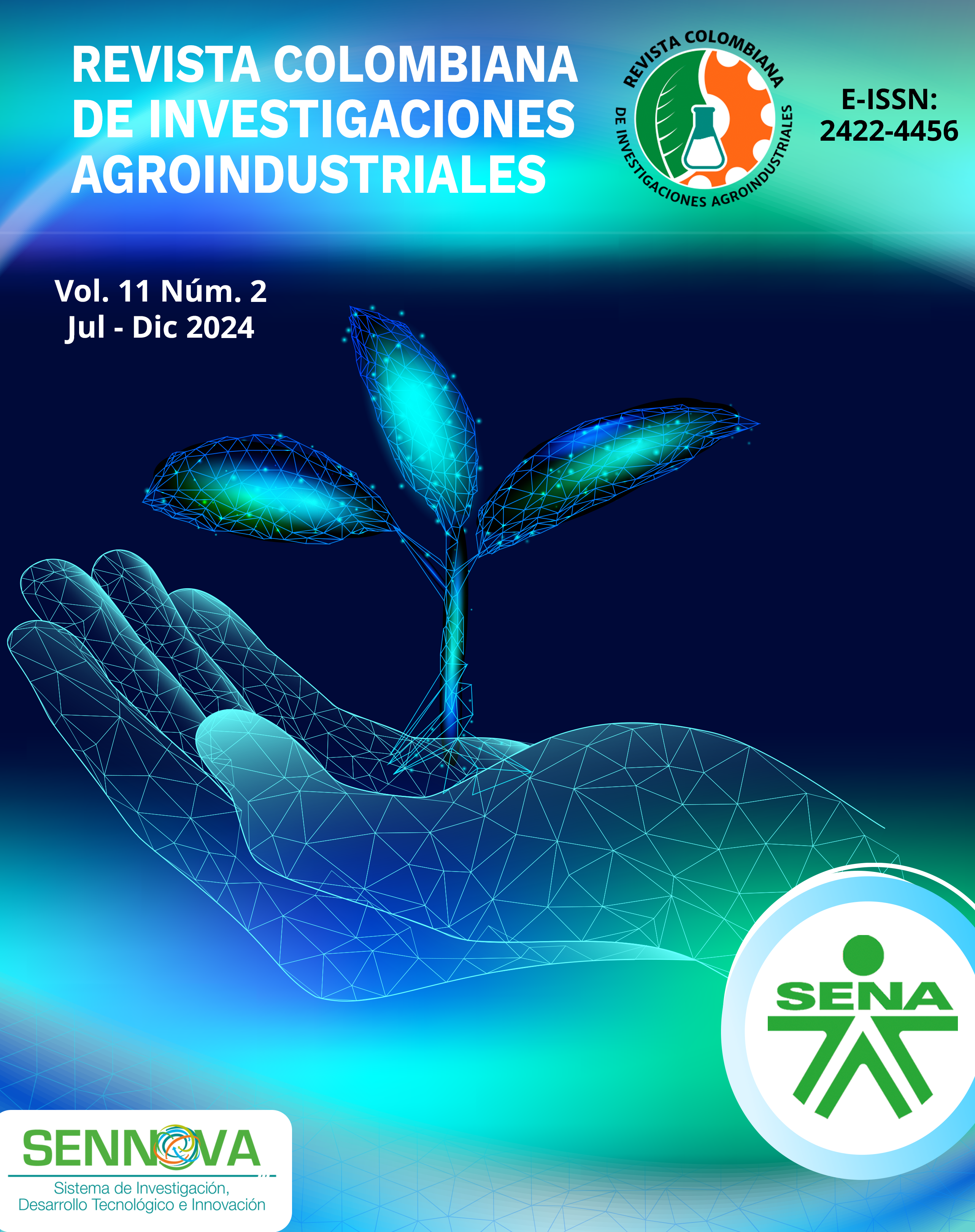
García López, D., Moguel Ordóñez, Y., Chel-Guerrero, L. A., & Betancur-Ancona, D. A. (2024). Utilization of honey bee broods with potential sustainable food in Yucatan, Mexico. Revista Colombiana De Investigaciones Agroindustriales, 11(2), 87–106. https://doi.org/10.23850/24220582.6656
Abstract
By 2050, the world will be home to more than 9 billion people, thus doubling the food demand. Currently, food production is based on practices such as livestock farming, agriculture, and fishing that require large amounts of non-renewable resources, making it unsustainable. Given this, there is a need to investigate other emerging food sources or ingredients that could provide nutritional components for the growing population. The objective of this work was to review various topics related to entomophagy, particularly to Apis mellifera brood produced in Yucatan Mexico, and analyze their relationship with food security, sustainability, marketing, and the nutritional contribution of insects with food potential. The information from books, review articles and research studies obtained from academic repositories related to A. mellifera bee brood was analyzed, published from 2002 to date and of which full access was obtained in search engines such as: Google Scholar, Scielo, ResearchGate, PubMed, Redalyc, Web of Science and ScienceDirect. The results showed that, due to their wide presence and nutrient content, the consumption of bee broods (larvae and pupae), particularly drones, is recommended since these are a potential source of protein, fat, and minerals. Beekeeping is part of the livestock activities, with more than 2 million hives in production in Mexico and about 250,000 in the Yucatan Peninsula alone. Honey bee broods could represent a product of interest that could provide added value within the hive products along with honey, wax, royal jelly, propolis, and apitoxin since it is a potential unexploited food that could be estimated at thousands of metric tons (MT) annually. Information on the chemical and nutritional composition of the brood at different stages of development of the honey bee is essential to endorse the species as food.
References
Addeo, N.F., Roncarati, A. Secci, G., Parisi, G., Piccolo, G., Ariano, A., Scivicco, M., A. Rippa, A., & Bovera, F. (2021). Potential use of a queen bee larvae meal (Apis mellifera ligustica Spin.) in animal nutrition: a nutritional and chemical-toxicological evaluation. Journal of Insects as Food and Feed, 7(2), 173-186. https://doi.org/10.3920/JIFF2020.0079
Alexander, P., Brown, C., Arneth, A., Dias, C., Finnigan, J., Moran, D., & Rounsevell, M. D. A. (2017). Could consumption of insects, cultured meat or imitation meat reduce global agricultural land use? Global Food Security, 15, 22–32. https://doi.org/10.1016/J.GFS.2017.04.001
Arechavaleta-Velasco, M. E., García-Figueroa, C., Alvarado-Avila, L. Y., Ramírez-Ramírez, F. J., & Alcalá-Escamilla, K. I. (2021). Resultados e impacto de la investigación en genética y mejoramiento genético de las abejas melíferas desarrollada por el INIFAP en México. Revista Mexicana de Ciencias Pecuarias, 12, 224–242. https://doi.org/10.22319/RMCP.V12S3.5919
Baer, B., Collins, J., Maalaps, K., & den Boer, S. P. A. (2016). Sperm use economy of honeybee (Apis mellifera) queens. Ecology and Evolution, 6(9), 2877. https://doi.org/10.1002/ECE3.2075
Barquera, S., Véjar-Rentería, L. S., Aguilar-Salinas, C., Garibay-Nieto, N., García-García, E., Bovecchio, A., Perichart, O., Torres-Tamayo, M., Esquivias-Zavala, H., Villalpando-Carrión, S., García-Méndez, R. C., Apolinar-Jiménez, E., Kaufer-Horwitz, M., Martínez-Montañez, O. G., Niquete, I. F., Crespo, A. A., Gómez-Álvarez, E., Hernández-Jiménez, S. C., Denova-Gutiérrez, E., . . . Rivera-Dommarco, J. (2022). Volviéndonos mejores: necesidad de acción inmediata ante el reto de la obesidad. Una postura de profesionales de la salud. Salud Pública de México, 64, 225-9. https://doi.org/10.21149/13679
Barrios-Mariutti, L. R., Sarmento-Rebelo, K., Bisconsin-Junior, A., Santos de Morais, J., Magnani, M., Rodrigues-Maldonade, I., Rodrigo-Madeira, N., Tiengo, A., Roberto-Maróstica, M., & Betim-Cazarin, C. B. (2021). The use of alternative food sources to improve health and guarantee access and food intake. Food Research International, 149, 110709. https://doi.org/10.1016/j.foodres.2021.110709.
Belluco, S., Losasso, C., Maggioletti, M., Alonzi, C. C., Paoletti, M. G., & Ricci, A. (2013). Edible insects in a food safety and nutritional perspective: A critical review. Comprehensive Reviews in Food Science and Food Safety, 12(3), 296–313. https://doi.org/10.1111/1541-4337.12014
Boes, K. E. (2009). Honeybee colony drone production and maintenance in accordance with environmental factors: an interplay of queen and worker decisions. Insectes Sociaux, 57(1), 1–9. https://doi.org/10.1007/S00040-009-0046-9
Charriére, J. D., Imdorf, A., Bachofen, B., & Tschan, A. (2015). The removal of capped drone brood: an effective means of reducing the infestation of varroa in honey bee colonies. Bee World, 84(3), 117–124. https://doi.org/10.1080/0005772X.2003.11099587
Choi, J. S. (2021). Nutrition, safety, health functional effects, and availability of honeybee (Apis mellifera L.) drone pupae. Insects, 12(9), 771. https://doi.org/10.3390/INSECTS12090771
Codex Alimentarius Commission. (2022). CCEXEC Sub-Committee on New Food Sources and Production Systems – Interim Report. In Executive Committee of the Codex Alimentarius Commission Eighty-second Session. FAO/WHO.
Commission Regulation (EU) 2017/893. (2017). Official Journal of the European Union of 24 May 2017 Amending Annex I and IV to Regulation (EC) No 999/2001 of the European Parliament and of the Council and Annexes X, XIV and XV to Commission Regulation (EU) No 142/2011 as Regards the Provisions on Processed Animal Protein. L 138/92-L138/116. https://faolex.fao.org/docs/pdf/eur166794.pdf
Costa-Neto, E.M., & Dunkel, F.V. (2016). Insects as food: history, culture, and modern use around the world. In: Dossey, A.T., Morales-Ramos, J.M & Rojas, G. (Eds), Insects as Sustainable Food Ingredients, (pp. 29-60). Academic Press, Cambridge, MA. https://doi.org/10.1016/B978-0-12-802856-8.00002-8.
da Silva Lucas, A. J., de Oliveira, L. M., da Rocha, M., & Prentice, C. (2020). Edible insects: An alternative of nutritional, functional and bioactive compounds. Food Chemistry, 311, 126022. https://doi.org/10.1016/J.FOODCHEM.2019.126022
de Carvalho, N. M., Madureira, A. R., & Pintado, M. E. (2019). The potential of insects as food sources – a review. Critical Reviews in Food Science and Nutrition, 60(21), 3642–3652. https://doi.org/10.1080/10408398.2019.1703170
Delfín-González H. & Chay-Hernández D. 2010. Riqueza de Hymenoptera. En: Durán R. Mández M. (Eds). Biodiversidad y Desarrollo Humano en Yucatán. CICY, PPD-FMAM, CONABIO, SEDUMA.
Döke, M. A., Frazier, M., & Grozinger, C. M. (2015). Overwintering honey bees: biology and management. Current Opinion in Insect Science, 10, 185–193. https://doi.org/10.1016/J.COIS.2015.05.014
Dossey, A. T., Tatum, J. T., & McGill, W. L. (2016). Modern Insect-Based Food Industry: Current Status, Insect Processing Technology, and Recommendations Moving Forward. In: Insects as Sustainable Food Ingredients: Production, Processing and Food Applications, Aaron T. Dossey, Juan A. Morales-Ramos, M. Guadalupe Rojas (Eds), pp 113–152. Academic Press, https://doi.org/10.1016/B978-0-12-802856-8.00005-3
Evans, J., Müller, A., Jensen, A. B., Dahle, B., Flore, R., Eilenberg, J., & Frøst, M. B. (2016). A descriptive sensory analysis of honeybee drone brood from Denmark and Norway. Journal of Insects as Food and Feed, 2(4), 277-283. https://doi.org/10.3920/JIFF2016.0014
FAO. (1996). Rome Declaration on World Food Security and World Food Summit Plan of Action Rome Declaration on World Food Security.
FAO. (2013). Dietary protein quality evaluation in human nutrition: Report of an FAO expert consultation. https://www.fao.org/ag/humannutrition/35978-02317b979a686a57aa4593304ffc17f06.pdf
FAO, IZSLT, Apimondia, & CAAS. (2021). Good beekeeping practices for sustainable apiculture. FAO Animal Production and Health Guidelines, 25. Roma. https://doi.org/10.4060/cb5353en
Feng, Y., Chen, X. M., Zhao, M., He, Z., Sun, L., Wang, C. Y., & Ding, W. F. (2018). Edible insects in China: Utilization and prospects. Insect Science, 25(2), 184–198. https://doi.org/10.1111/1744-7917.12449
Fry, J.P., Mailloux, N.A., Love, D.C., Michael C Milli, M.C., & Cao, L. (2018). Feed conversion efficiency in aquaculture: do we measure it correctly? Environmental Research Letters, 13(2), 024017. https://doi.org/10.1088/1748-9326/aaa273
Ghosh, S., Jung, C., & Meyer-Rochow, V. B. (2016). Nutritional value and chemical composition of larvae, pupae, and adults of worker honey bee, Apis mellifera ligustica as a sustainable food source. Journal of Asia-Pacific Entomology, 19(2), 487–495. https://doi.org/10.1016/J.ASPEN.2016.03.008
Ghosh, S., Sohn, H. Y., Pyo, S. J., Jensen, A. B., Meyer-Rochow, V. B., & Jung, C. (2020). Nutritional composition of Apis mellifera drones from Korea and Denmark as a potential sustainable alternative food source: comparison between developmental stages. Foods, 9(4), 389. https://doi.org/10.3390/FOODS9040389
Ghosh, S., Meyer-Rochow, V. B., & Jung, C. (2021). Honey bees and their brood: a potentially valuable resource of food, worthy of greater appreciation and scientific attention. Journal of Ecology and Environment, 45(1), 1–12. https://doi.org/10.1186/s41610-021-00212-y
Guiné, R. P. F., Florença, S. G., Costa, C. A., Correia, P. M. R., Ferreira, M., Cardoso, A. P., Campos, S., Anjos, O., Chuck-Hernández, C., Sarić, M. M., Djekic, I., Papageorgiou, M., Baro, J. M. F., Korzeniowska, M., Černelič-Bizjak, M., Bartkiene, E., Tarcea, M., Boustani, N. M., Klava, D., & Damarli, E. (2023). Investigation of the level of knowledge in different countries about edible insects: Cluster segmentation. Sustainability 15(1), 450. https://doi.org/10.3390/SU15010450
Guzmán-Novoa, E., Benítez, A. C., Montaño, L. G. E., & Novoa, G. G. (2011). Colonization, impact and control of Africanized honey bees in Mexico. Veterinaria México, 42(2), 149–178.
Haber, M., Mishyna, M., Itzhak Martinez, J. J., & Benjamin, O. (2019). Edible larvae and pupae of honey bee (Apis mellifera): Odor and nutritional characterization as a function of diet. Food Chemistry, 292, 197–203. https://doi.org/10.1016/J.FOODCHEM.2019.04.041
Harbo, J. R. (2015). Effect of population size on brood production, worker survival and honey gain in colonies of honeybees. Journal of Apicultural Research, 25(1), 22–29. https://doi.org/10.1080/00218839.1986.11100687
Hrassnigg, N., & Crailsheim, K. (2005). Differences in drone and worker physiology in honeybees (Apis mellifera). Apidologie, 36(2), 255–277. https://doi.org/10.1051/APIDO:2005015
Kim, J.E., Kim, D.I., Koo, H.Y., Kim, H.J., Kim, S-Y., Lee, Y.B., Kim, J.S., Kim, H.H., Moon, J.H., & Choi, Y.S. (2020). Analysis of nutritional compounds and antioxidant effect of freeze-dried powder of the honey bee (Apis mellifera L.) drone (pupal stage). Korean Journal of Applied Entomology, 59(3), 265–275. https://doi.org/10.5656/KSAE.2020.08.0.029
Loucif-Ayad, W., Aribi, N., Smagghe, G., & Soltani, N. (2010). Comparative effectiveness of some acaricides used to control Varroa destructor (Mesostigmata: Varroidae) in Algeria. African. Entomology, 18(2), 259–266. https://doi.org/10.4001/003.018.0211
Krongdang, S., Phokasem, P., Venkatachalam, K., & Charoenphun, N. (2023). Edible insects in Thailand: An overview of status, properties, processing, and utilization in the food industry. Foods, 12(11). https://doi.org/10.3390/FOODS12112162
Magaña-Magaña, M. A., Tavera-Cortés, M. E., Salazar-Barrientos, L. L., Sanginés-García, J. R. (2016). Productividad de la apicultura en México y su impacto sobre la rentabilidad. Revista Mexicana de Ciencias Agrícolas, 7(5), 1103–1115. http://www.scielo.org.mx/scielo.php?script=sci_arttext&pid=S2007-09342016000501103&lng=es&nrm=iso&tlng=es
Mancuso, T., Croce, L., & Vercelli, M. (2020). Total brood removal and other biotechniques for the sustainable control of varroa mites in honey bee colonies: economic impact in beekeeping farm case studies in Northwestern Italy. Sustainability, 12(6), 2302. https://doi.org/10.3390/SU12062302
Martínez-Puc, J. Medina-Medina L, & Catzín-Ventura G. (2011). Frecuencia de Varroa destructor, Nosemaapisy Acarapis woodien colonias manejadas y enjambres silvestres de abejas (Apis mellifera) en Mérida, Yucatán, México. Revista Mexicana de Ciencias Pecuarias. 2, 25-38. http://www.scielo.org.mx/pdf/rmcp/v2n1/v2n1a3.pdfMEDINA-FLORES
Medina, L. M., Martin, S. J., Espinosa-Montaño, L., & Ratnieks, F. L. W. (2002). Reproduction of Varroa destructor in worker brood of Africanized honey bees (Apis mellifera). Experimental & Applied Acarology, 27(1–2), 79–88. https://doi.org/10.1023/A:1021579113907
Medina-Flores, C.A., López-Carlos, M., Carrillo-Muro, O. & Gray, A. (2023). Honey Bee colony losses in Mexico’s semi-arid high plateau for the winters 2016–2017 to 2021–2022. Insects, 14, 453. https:// doi.org/10.3390/insects14050453
Mitchell, D. (2023). Honeybee cluster-not insulation but stressful heat sink. Journal of the Royal Society, Interface, 20, 20230488. https://doi.org/10.1098/rsif.2023.0488
Mondet, F., Rau, A., Klopp, C., Rohmer, M., Severac, D., Le Conte, Y., & Alaux. C. (2018). Transcriptome profiling of the honeybee parasite Varroa destructor provides new biological insights into the mite adult life cycle. BMC Genomics, 19, 328. https://doi.org/10.1186/s12864-018-4668-z
Nates-Parra, G. (2011). Genética del comportamiento: abejas como modelo. Acta Biológica Colombiana, 16(3), 213-230.
Norma Oficial Mexicana NOM-002-SAG/GAN-2016. Actividades técnicas y operativas aplicables al Programa Nacional para el Control de la Abeja Africana. https://www.gob.mx/cms/uploads/attachment/file/567753/NOM-002-SAG-GAN-2016.pdf
Ocampo-Thomason, P., Vázquez-Elorza, A., & Cocom-Vázquez J.M. (2016). Producción de miel en México: situación histórica y actual. En: Ramos Díaz, A.L., & Pacheco-López, N.A. (Eds). Producción y comercialización de miel y sus derivados en México: desafíos y oportunidades para la exportación (pp. 21-49), CIATEJ. México. ISBN 978-607-97421-2-6
Onore, G. (2010). A brief note on edible insects in Ecuador. Ecology of Food and Nutrition, 36(2–4), 277–285. https://doi.org/10.1080/03670244.1997.9991520
Oonincx, D. G. A. B., van Broekhoven, S., van Huis, A., & van Loon, J. J. A. (2015). Feed conversion, survival and development, and composition of four insect species on diets composed of food by-products. PLoS ONE, 10(12), e0222043. https://doi.org/10.1371/JOURNAL.PONE.0144601
Papa, G., Maier, R., Durazzo, A., Lucarini, M., Karabagias, I. K., Plutino, M., Bianchetto, E., Aromolo, R., Pignatti, G., Ambrogio, A., Pellecchia, M., & Negri, I. (2022). The honey Bee Apis mellifera: An insect at the interface between human and ecosystem health. Biology, 11(2), 233. https://doi.org/10.3390/BIOLOGY11020233
Pinkus Rendón, M.A., (2013). Abejas, avispas y hormigas en la perspectiva local yucateca, Entomología Mexicana, 12, 1706-1711.
Precedence Research Pvt. Ltd. (2024). Edible Insects Market (By Product: Caterpillar, Beetles, Cricket, Others; By Application: Powder, Protein Bars, Others) - Global Industry Analysis, Size, Share, Growth, Trends, Regional Outlook, and Forecast 2024-2033. https://www.precedenceresearch.com/edible-insects-market
Ramírez-Miranda, I., Betancur-Ancona, D., Moguel-Ordóñez, Y. (2021). Physicochemical and microbiological standards of honey produced by genus Melipona. Journal of Apiculrural Science, 65(2), 197-216. https://doi.org/10.2478/jas-2021-0016
Ramos-Elorduy, J., Moreno, J. M. P., Prado, E. E., Perez, M. A., Otero, J. L., & De Guevara, O. L. (1997). Nutritional value of edible insects from the state of Oaxaca, Mexico. Journal of Food Composition and Analysis, 10(2), 142–157. https://doi.org/10.1006/JFCA.1997.0530
Ramos-Elorduy, J., Pino, J. & Conconi, M. (2006). Ausencia de una reglamentación y normalización de la explotación y comercialización de insectos comestibles en México. Folia Entomol6gica Mexicana, 45(3), 291-318. https://www.redalyc.org/articulo.oa?id=42445304
Regulation (EU) 2015/2283 of the European Parliament and of the Council. (2015). On novel foods, amending Regulation (EU) No 1169/2011 of the European Parliament and of the Council and repealing Regulation (EC) No 258/97 of the European Parliament and of the Council and Commission Regulation (EC) No 1852/2001. http://data.europa.eu/eli/reg/2015/2283/oj
Rodríguez-Rodríguez, M., Barroso, F. G., Fabrikov, D., & Sánchez-Muros, M. J. (2022). In vitro crude protein digestibility of insects: A review. Insects, 13(8), 682. https://doi.org/10.3390/INSECTS13080682
Schneider, S. S., Degrandi-Hoffman, G., & Smith, D. R. (2004). The African honey bee: factors contributing to a successful biological invasion. Annual Review of Entomology, 49, 351–376. https://doi.org/10.1146/annurev.ento.49.061802.123359
Schiel, L., Wind, C., Ulmer, M., Braun, P. G., & Koethe, M. (2022). Honey bee drone brood used as food. Ernahrungs Umschau, 69(7), 96–104.
SADER. (2019). Secretaría de Agricultura y Desarrollo Rural. Manual Programa Nacional para el Control de la Abeja Africana (4a ed.). Gobierno de México.
Shamah-Levy T, Gaona-Pineda EB, Cuevas-Nasu L, Morales-Ruan C, Valenzuela-Bravo DG, Méndez-Gómez Humarán I, & Ávila-Arcos MA. (2023). Prevalencias de sobrepeso y obesidad en población escolar y adolescente de México. Ensanut Continua 2020-2022. Salud Publica Mex. 65(supl 1), S218-S224. https://doi.org/10.21149/14762
Servicio de Información Agroalimentaria y Pesquera [SIAP]. (2023). Panorama Agroalimentario 2023 (2022nd ed.). https://online.pubhtml5.com/vqdk/rvdl/#google_vignette
Servicio de Información Agroalimentaria y Pesquera [SIAP]. (2024). Anuario Estadístico de la Producción Ganadera. https://nube.siap.gob.mx/cierre_pecuario/
Stork, N. E. (2018). How many species of insects and other terrestrial arthropods are there on Earth? Annual Review of Entomology, 63, 31–45. https://doi.org/10.1146/ANNUREV-ENTO-020117-043348
Suna, S., & Çopur, Ö. U. (2018). A new approach: Replacement and alternative foods for food industry. Alternative and Replacement Foods, 17, 1–30. https://doi.org/10.1016/B978-0-12-811446-9.00001-0
Tauber, J. P., Collins, W. R., Schwarz, R. S., Chen, Y., Grubbs, K., Huang, Q., Lopez, D., Peterson, R., & Evans, J. D. (2019). Natural product medicines for honey bees: perspective and Protocols. Insects, 10(10), 356. https://doi.org/10.3390/insects10100356
Tumas, N., de la Vega, C., Gutiérrez-Zamora, M.N., Cash-Gibson, L., Carreño, P., Pericàs, J.M., & Benach, J. (2024). Políticas públicas e intervenciones para prevenir el exceso de peso en México: análisis desde una perspectiva interseccional. Ciência & Saúde Coletiva, 29 (9), e04142023. https://doi.org/10.1590/1413-81232024299.04142023
Turck, D., Bohn, T., Castenmiller, J., De Henauw, S., Hirsch-Ernst, K. I., Maciuk, A., Mangelsdorf, I., McArdle, H. J., Naska, A., Pelaez, C., Pentieva, K., Siani, A., Thies, F., Tsabouri, S., Vinceti, M., Cubadda, F., Frenzel, T., Heinonen, M.,
Marchelli, R., & Knutsen, H. K. (2021). Safety of frozen and dried formulations from whole house crickets (Acheta domesticus) as a novel food pursuant to regulation (EU) 2015/2283. EFSA Journal, 19(8). https://doi.org/10.2903/J.EFSA.2021.6779
Ulmer, M., Smetana, S., & Heinz, V. (2020). Utilizing honeybee drone brood as a protein source for food products: Life cycle assessment of apiculture in Germany. Resources, Conservation and Recycling, 154, 104576. https://doi.org/10.1016/J.RESCONREC.2019.104576
van Dijk, M., Morley, T., Rau, M. L., & Saghai, Y. (2021). A meta-analysis of projected global food demand and population at risk of hunger for the period 2010–2050. Nature Food, 2(7), 494–501. https://doi.org/10.1038/s43016-021-00322-9
van Huis, A., Itterbeeck, H. K., Klunder, V. I. J., Mertens, E., Halloran, A., Muir, G., & Vantomme P. (2013). Edible insects Future prospects for food and feed security. https://www.fao.org/3/i3253e/i3253e.pdf
Wade, M., & Hoelle, J. (2020). A review of edible insect industrialization: scales of production and implications for sustainability. Environmental Research Letters, 15(12), 123013. https://doi.org/10.1088/1748-9326/ABA1C1
Yhoung-Aree, J., Puwastein, P., & Attig, G. A. (2010). Edible insects in Thailand: An unconventional protein source? Ecology of Food and Nutrition, 36(2–4), 133–149. https://doi.org/10.1080/03670244.1997.9991511
Zoltowska, K., & Frączek, R. (2011). Hydrolases of developing worker brood and newly emerged worker of Apis mellifera carnica. Journal of Apicultural Science, 55 (1), 27-36. https://www.researchgate.net/publication/233943106

This work is licensed under a Creative Commons Attribution-NonCommercial-NoDerivatives 4.0 International License.
Downloads
Download data is not yet available.